What Machines Are Included in a Complete Facial Tissue Production Line?
Facial tissue may seem like a simple everyday product, but behind every box of neatly folded tissues is a highly coordinated production system.
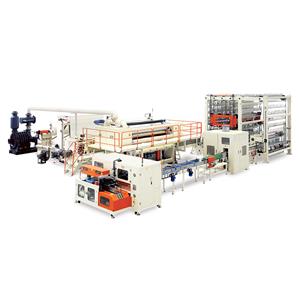
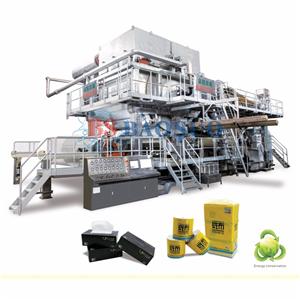
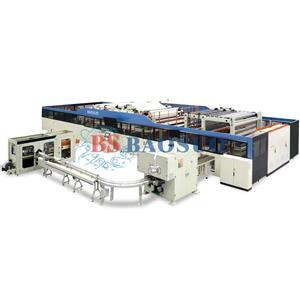
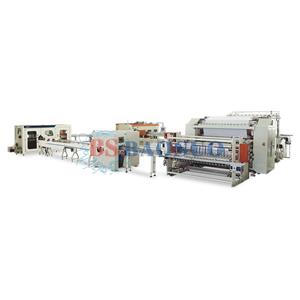
A complete facial tissue production line is not just one machine—it is a combination of converting, cutting, packaging, and conveying equipment working together to transform jumbo rolls into finished products ready for the market.
So, what machines are typically included in a complete facial tissue production line? Let’s break it down.
1. Jumbo Roll Unwinding System – Where Production Begins
Every facial tissue production process starts with the jumbo paper roll.
The unwinding system is responsible for feeding the parent roll into the production line with stable tension and precise control. A good unwinding unit ensures smooth paper feeding, reduces breakage, and maintains consistent production speed.
Depending on production requirements, the system may include:
Single or multiple jumbo roll stands
Automatic paper loading
Tension control systems
Web guiding devices
This is the first step in ensuring production stability and tissue quality.
2. Embossing and Lamination Unit – Enhancing Tissue Quality
Before folding, facial tissue often passes through an embossing system.
This unit creates texture on the tissue surface, improving:
Softness and appearance
Ply bonding strength
Product aesthetics
Brand differentiation through custom patterns
For multi-ply facial tissues, lamination systems may also be included to bond layers together more effectively.
A quality embossing system helps manufacturers produce tissues that meet both functional and market expectations.
3. Facial Tissue Folding Machine – The Core of the Production Line
The facial tissue folding machine is the heart of the entire production line.
This machine converts paper from jumbo rolls into interfolded tissue logs according to the required sheet size and folding type.
Key functions include:
Folding
Counting
Interleaving
Sheet length control
Automatic stacking
High-speed folding machines directly determine production capacity and output efficiency.
Different configurations can be selected depending on the desired tissue format and factory production scale.
4. Log Saw Cutting Machine – Precision Cutting for Finished Products
After folding, tissues are formed into long logs that must be cut into finished product sizes.
This is the job of the log saw cutting machine.
A high-performance cutting machine ensures:
Accurate cutting length
Clean cutting edges
Stable operation at high speed
Reduced product waste
Cutting precision is especially important for maintaining packaging quality and final product appearance.
5. Automatic Transfer and Conveying System – Connecting the Process
In a modern production line, products should move automatically from one stage to another without manual handling.
Automatic conveying systems help connect:
Folding machine to cutting machine
Cutting machine to packaging equipment
Packaging to bundling or cartoning systems
This improves efficiency, reduces labor requirements, and creates a smoother production flow.
For large-scale factories, conveying systems are essential for complete automation.
6. Single Pack Packaging Machine – Turning Products into Retail-Ready Packs
Once tissues are cut, they need to be packaged.
The single pack packaging machine wraps each facial tissue pack into its retail format.
Depending on market requirements, packaging can include:
Film wrapping
Box packing
Soft pack facial tissue packaging
Automatic sealing and coding
Packaging quality affects both product protection and shelf presentation.
7. Bundle Packing and Cartoning System – For Secondary Packaging
After single packs are completed, many factories use additional packaging systems for transportation and wholesale distribution.
These machines may include:
Bundle packing machines
Cartoning machines
Case packing systems
Palletizing systems
Secondary packaging improves logistics efficiency and prepares products for shipping.
8. Intelligent Control System – The Brain Behind the Line
A modern complete facial tissue production line is powered by intelligent automation systems.
These systems help monitor and control:
Machine speed
Paper tension
Product counting
Fault detection
Production data
Line synchronization
Smart control systems improve operational stability and make maintenance easier.
A Complete Solution Is More Than Just Machines
A complete facial tissue production line is not simply a collection of individual machines—it is an integrated production system designed to deliver efficiency, product quality, and automation.
From jumbo roll unwinding, embossing, folding, cutting, packaging, to conveying and intelligent control, each machine plays a critical role in the final product.
For tissue manufacturers, understanding the full production line helps make better investment decisions and build a more efficient, competitive factory.